The 2026 Guide to Cigar Maturation: Why Material Science and "Breathing" Define the Perfect Box
Mar 09,2026 | Benjamin
In the world of premium tobacco, a cigar box is more than just a container—it is a biological engine. As we move through 2026, the global community of aficionados has shifted its focus from mere storage to active maturation.
To truly understand how to protect your investment, you must understand the two pillars of aging: Material Porosity and Atmospheric Equilibrium.
1. The Science of Aging: Why Cigars Must "Breathe"
A cigar is a living, organic product. Even after it is rolled, the tobacco leaves continue a slow, internal fermentation process.
-
Off-Gassing: During aging, cigars naturally release trace amounts of ammonia and heavy oils. If these gases are trapped, the cigar develops a "stale" or "muted" flavor.
-
Oxygen Exchange: To evolve and develop complex secondary aromas (like chocolate, leather, or spice), the cigar requires a microscopic, controlled exchange of oxygen.
-
The Golden Mean: If a box is too ventilated, the essential oils evaporate and the cigar dies. If it is airtight with no organic buffer, the cigar suffocates in its own byproduct.
2. Spanish Cedar: The "Auxiliary Lung" of Your Collection
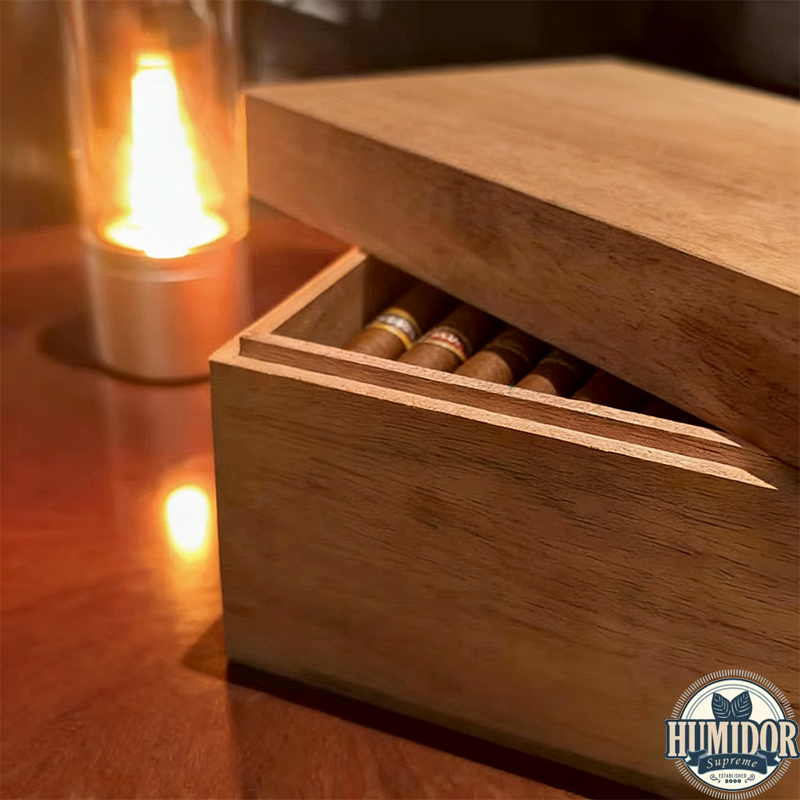
Why is Spanish Cedar (Cedrela odorata) the gold standard in 2026? It is the only material that actively participates in the cigar’s respiration.
-
The Micro-Pore Network: Unlike hardwoods or plastic, Spanish Cedar has an incredibly porous cellular structure. It acts as a humidity battery, soaking up moisture when it’s high and breathing it back out when the air is dry.
-
Chemical Symbiosis: It contains a natural resin called Cedrol. As the cigar "breathes" against the cedar walls, it absorbs this resin, which rounds off the harshness of the tobacco and creates the iconic "aged" bouquet.
-
The Bio-Shield: Its distinct aroma is a natural deterrent to Lasioderma serricorne (cigar beetles) and prevents the growth of fungal spores in high-humidity environments.
3. The Paradox of the Seal: Airtight vs. Breathable
A common misconception in 2026 is that a "perfect seal" is all that matters. In reality, the best boxes utilize a Dual-Layer Logic.
The "Lock & Lock" Trap
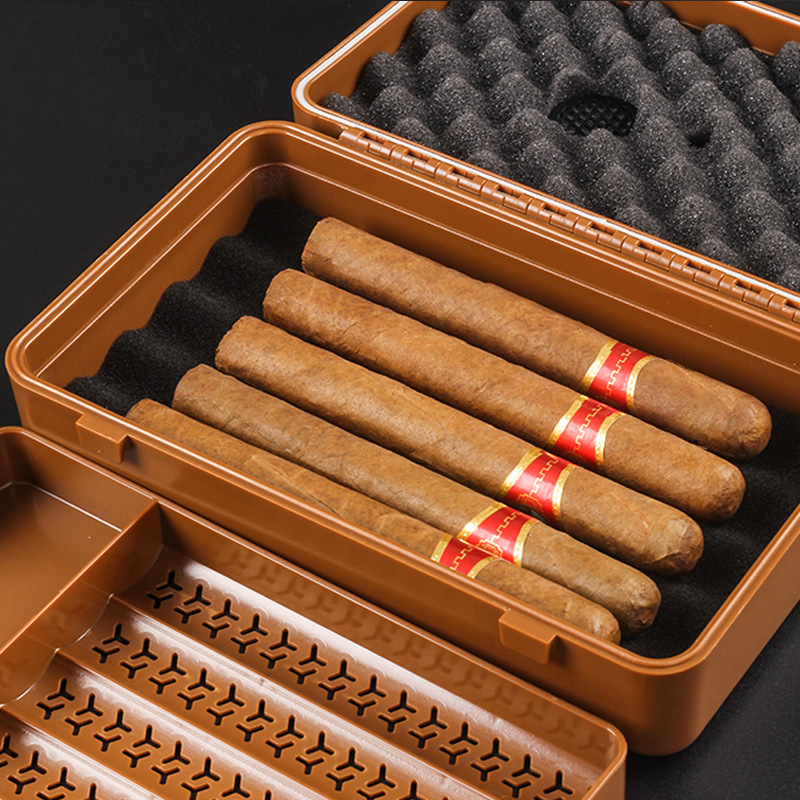
Plastic containers or acrylic humidors offer a 100% Hermetic Seal.
-
The Problem: While they are excellent for maintaining a rock-solid RH (Relative Humidity), they offer zero respiration. In a plastic environment, cigars are "preserved" but they do not "age." Over years, they can develop a "flat" profile because the ammonia has nowhere to go.
The Professional "Pneumatic" Seal
A high-end wooden box aims for a Damped Seal:
-
The "Whoosh" Test: When you close a premium lid, you should hear a soft whoosh of air followed by a heavy thud. This signifies a physical seal strong enough to block external weather fluctuations.
-
Internal Micro-Climate: While the outer seal is tight, the Spanish Cedar lining handles the internal breathing. The wood absorbs the internal gases and maintains the delicate oxygen balance that plastic cannot provide.
4. The 2026 Hybrid Design: The Best of Both Worlds
For the ultimate aging environment, modern collectors now prefer the "Reinforced Hybrid" construction:
-
The Exterior (The Fortress): Crafted from high-density hardwoods like African Mahogany or Walnut. These woods are structurally stable; they won't warp or expand, ensuring the lid's seal remains airtight for decades.
-
The Interior (The Soul): A thick lining (5mm+) of Spanish Cedar. This layer provides the humidity buffer and the aromatic "lung" that the cigars need to mature.
The Verdict: By choosing a Mahogany-Exterior / Spanish Cedar-Interior box, you get the durability of a vault and the life-giving environment of a traditional aging room.
Коментирайте